
How to reduce no-shows for restaurant bookings and club tables
A no-show is a table you held, staffed and turned other guests away from, for nobody. You cannot stop every one, but you can cut the number and lose less on those that remain.
Key takeaways
- Measure first: count no-shows apart from cancellations, by day, party size and where the booking came from.
- Have guests confirm, and make cancelling take one tap. A cancellation you hear about is a table you can fill.
- Decide how long you hold a table, tell the guest, and have a waitlist ready to take it.
- Keep deposits and card guarantees for the nights and tables where a no-show hurts most.
Every venue has no-shows, and most know them only as a feeling: Fridays are bad, big groups are worse. Before you change anything, find out how many there really are and where they come from. The fix for a table of two that forgot is not the fix for a party of ten that booked three places and chose one.
Measure it first
Count three things separately, because each one needs a different answer:
- No-show
- The guest did not arrive and did not tell you.
- Late cancellation
- The guest told you, but too late to give the table to someone else.
- Cancellation
- The guest told you in time. This is the system working, not a problem.
No-show rate = bookings that did not arrive ÷ all bookings × 100
A month of bookings, as an example:
| Step | Bookings |
|---|---|
| Bookings taken | 400 |
| Cancelled in time | 52 |
| Did not arrive | 36 |
| No-show rate: 36 ÷ 400 | 9% |
| Of those, parties of six or more | 20 |
Nine per cent is this example's number, not a target. The last row is the useful one: more than half the no-shows are large parties, so that is where to start. Split your own number the same way: by day and time, by party size, by how far ahead the booking was made, and by where it came from, such as the website, the phone or a member of staff.
Why guests do not turn up
- They forgot. The booking was made two weeks ago and nothing reminded them.
- Plans changed, and cancelling was more effort than staying away: a phone call during service, or a form they could not find.
- They booked several places and picked one on the night.
- They never meant it. A half-hearted request costs nothing to send.
- They were late, the table was given away, and it went down as a no-show.
Each cause has its own fix, and most of the fixes cost nothing.
Before the booking date
Make the request real
Ask for an email address and a phone number, and check that at least one works. A guest who has confirmed their email has done one small thing to commit, and a request sent with a made-up address never reaches you.
Confirm, then confirm again
Confirm at once, with the date, the time, the party size and how long the table is theirs. For bookings made more than a few days ahead, get in touch again the day before. For large parties, phone: two minutes on the phone for a table of twelve is cheap.
Make cancelling take one tap
Put a link to change or cancel in the confirmation. It feels backwards, but every guest who cancels through it would otherwise have been a no-show, and you hear about it in time to give the table to someone else.
Say how long you hold the table
"We hold your table for 15 minutes" gives the guest a clear rule and gives your host the right to release it. Choose the time to suit your service, then keep to it.
On the night
A table does not have to stay empty because its party is late.
- Mark late tables, so the host sees them without checking the clock against the book.
- Call or message the guest at the hold time. A party that is five minutes away is glad to be asked.
- Release the table at the time you said you would, not twenty minutes after.
- Keep a waitlist, and seat walk-ins on released tables. The no-show still happened, but the table earned.
- Record what happened to every booking: arrived, cancelled or no-show. Without the record, next month's number is a feeling again.
In a club the same applies to VIP tables, with one addition. Decide a time, for example an hour after doors, after which an unclaimed booth goes to the queue, and tell the guest when they book.
Deposits and card guarantees
Taking money up front, or card details with a no-show fee, is the strongest tool and the one guests like least. Some will not book at all, so it costs you bookings as well as saving them. Venues that do it take the payment through their own payment provider.
Use it where a no-show hurts most, not everywhere:
- Large parties, where one no-show empties a good part of the room.
- The nights that sell out: New Year's Eve, Valentine's Day, a headline DJ.
- The best tables, such as booths with a minimum spend.
- Guests who have failed to turn up before.
Keep the terms short and show them before the guest books: how much, when it is refunded, and what happens if they cancel. Whether you may charge a no-show fee, and how you must tell the guest, depends on the consumer law where you trade, so check before you start.
Guests who do it twice
Most guests who miss a booking do it once. A few do it every month. Keep a record for each guest of the bookings they made, kept and cancelled, and look at it before you confirm a big table. A regular with ten visits who misses one gets a friendly call. A name with three bookings and no arrivals is asked to confirm by phone, or is given a table that is easy to fill again.
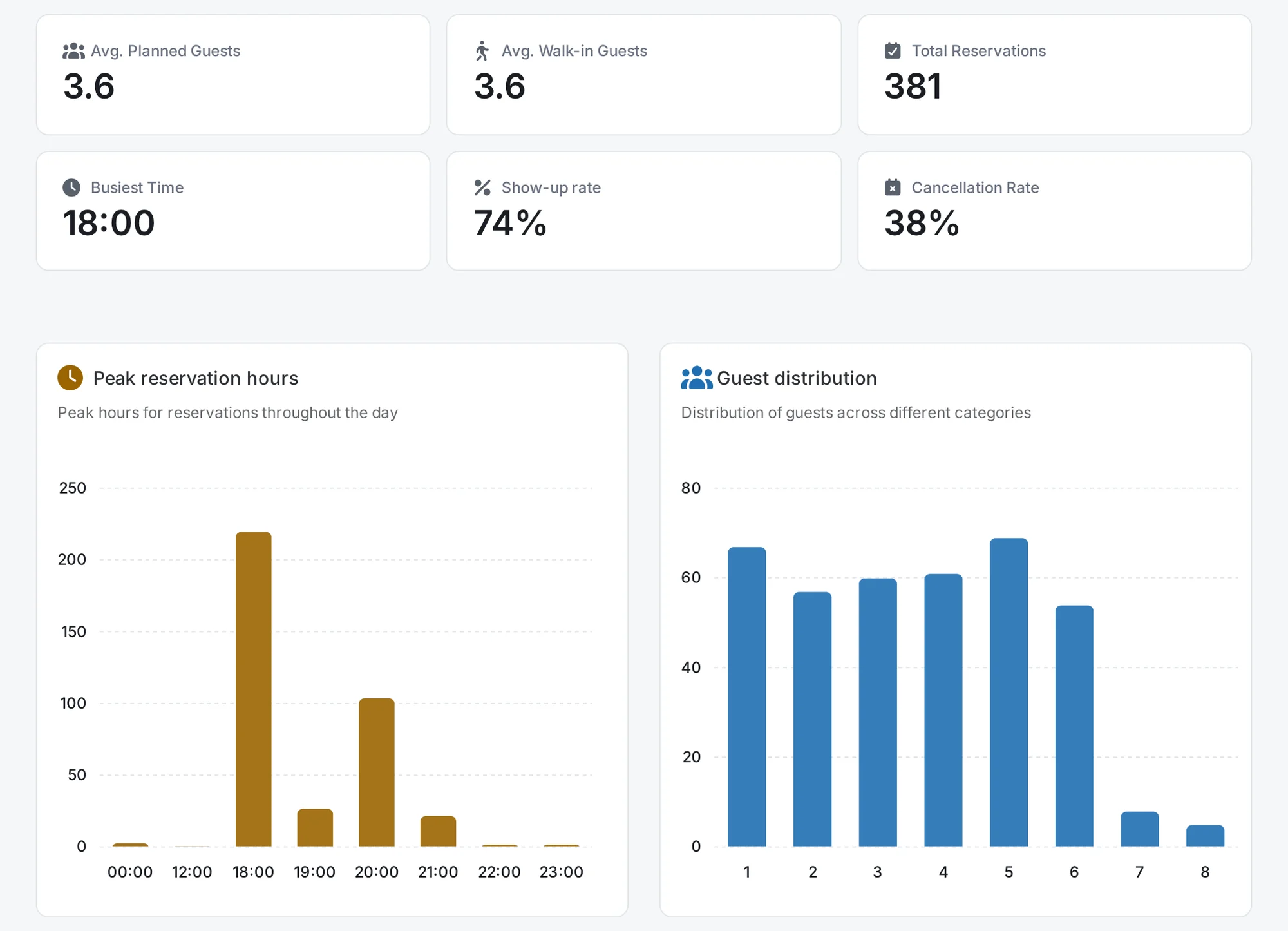
No-shows in Firetable
In Firetable a guest who books through the widget confirms their email address before the request reaches you. They get a link to their booking, in their own language, where they change the details or cancel without calling. Your team accepts, moves or declines each request from one inbox. On the live floor a table whose guests are late turns red, and the host seats walk-ins or a party from the waitlist when a table is released. Analytics show the show-up rate and the cancellation rate for each venue, with peak hours and walk-ins against planned bookings. Each guest's profile keeps their visit history, including the nights they cancelled, and an arrival rate. See restaurant reservation software, nightclub reservation software and host stand software.