Reordering Guide
Par Levels for Bars: How to Set Smarter Minimum Stock Levels
Par levels help bars avoid two expensive problems at the same time: running out too early and over-ordering too often. The right number depends on demand, delivery timing, venue format, and how much volatility you deal with across regular nights, event nights, and seasonal service.
- Set par levels with real demand and supplier lead time, not with rough guesswork.
- Separate regular-night pars from event-night or seasonal pars when the venue changes shape.
- Treat premium bottles, fast movers, and perishables differently because they create different stock risks.
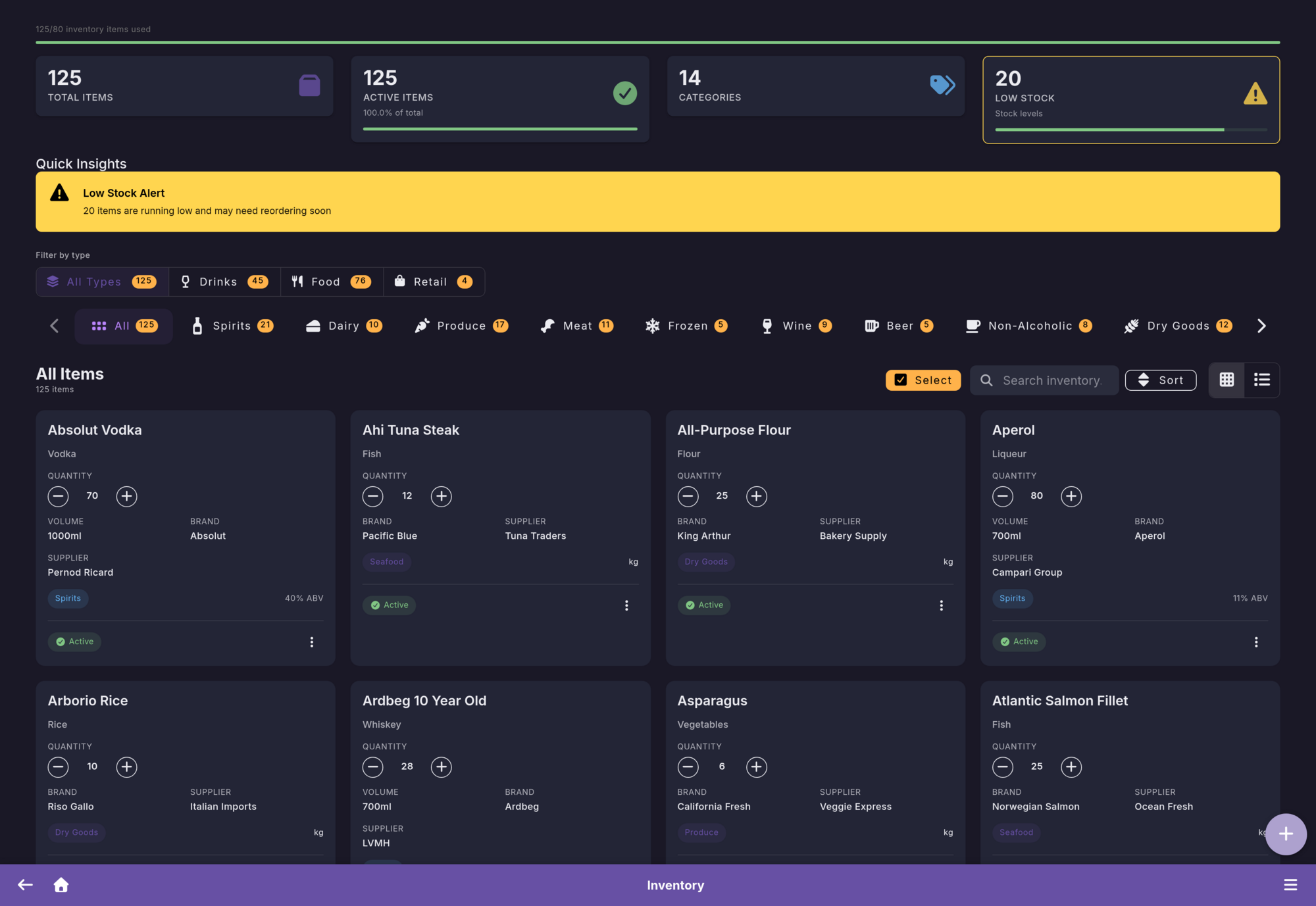
What a Par Level Should Actually Do
A par level is the minimum quantity you want on hand before a reorder needs attention. It is not just a safety number. It is a buffer that helps the venue survive normal consumption, delivery timing, and demand spikes without overloading storage.
For nightlife operators, that number often changes by bar, event type, and season. A rooftop bar, main room nightclub, and beach club terrace do not consume the same items at the same pace, even inside the same business.
How to Set Smarter Pars
Start with average movement. Look at how quickly an item actually leaves stock over a normal ordering cycle. Then add supplier lead time, expected demand swings, and a sensible safety margin for weekends or events.
The best par level is rarely static across the whole year. Summer service, artist nights, private events, and high-value VIP demand can all shift the right minimum level for the same product.
- Use real consumption velocity as the starting point
- Add supplier lead time before choosing the reorder threshold
- Keep separate logic for weekday, weekend, and event-heavy service
- Review slow movers separately so dead stock does not hide behind a high par
Common Par Level Mistakes
The most common mistake is setting the same par for every service format. That leads to stockouts on busy nights and over-ordering on slower ones. Another problem is ignoring storage limits or allowing premium items to sit at the same buffer level as fast-moving mixers.
A better system uses movement data, supplier timing, and venue context together. When you connect par levels to real stock movement, reorder suggestions become more useful and less reactive.
Related Reading
Keep building the inventory workflow with connected Firetable pages.
How to Do a Bar Stock Take
Use cleaner counts and reviews to make your par levels more reliable.
Read nextFIFO vs FEFO for Bar Inventory
Combine better reorder thresholds with better stock rotation rules.
Read nextReduce Liquor Waste in Bars
Lower waste by matching stock levels more closely to real demand.
Read nextBar Inventory Management Software
Use live stock visibility and reorder suggestions instead of spreadsheets.
Read nextSet par levels with real operational context
Firetable helps nightlife teams use live inventory, movement history, and reorder signals instead of guessing where minimum stock should sit.
Explore inventory workflow