Waste Reduction Guide
How to Reduce Liquor Waste in Bars and Nightclubs
Liquor waste usually comes from a small group of repeat problems: overpouring, expired perishables, dead stock, missing transfers, and poor visibility between premium service areas. Once those problems are visible, most venues can cut waste faster than they expect.
- Most liquor waste comes from process gaps, not one-off mistakes.
- Expiry tracking, transfer visibility, and smarter pars usually reduce waste faster than another manual spreadsheet.
- Bottle service, events, and multi-zone venues need tighter coordination because premium stock moves across more hands.
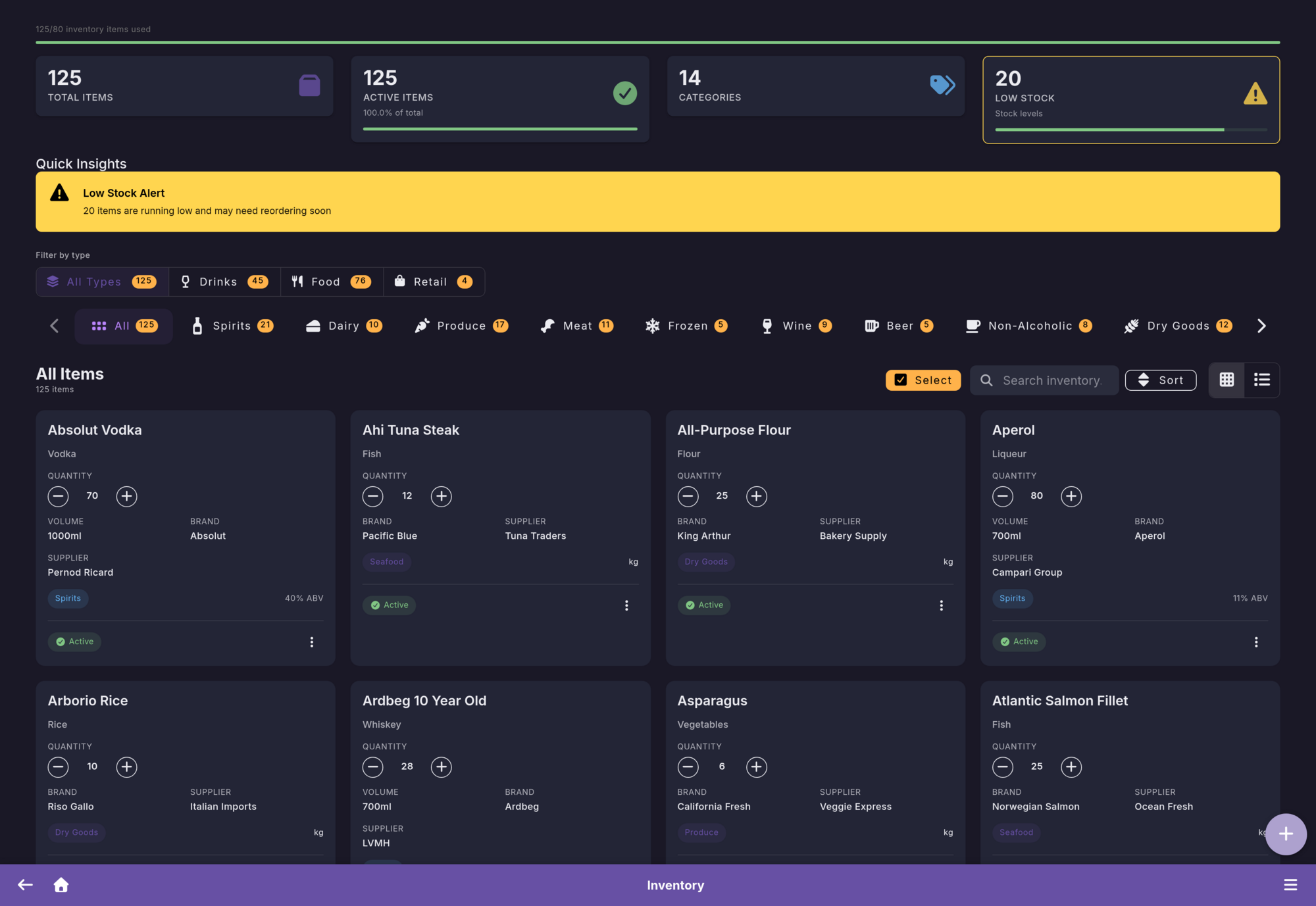
Where Waste Usually Starts
Waste often starts with poor visibility. Managers cannot see which batch is nearest expiry, the team does not know which stock was moved to VIP service, and overpouring is not visible until after the count is done.
Nightlife venues also lose margin when premium bottles sit too long, fresh prep expires before it is rotated properly, or event stock is not reconciled cleanly after service. The issue is usually not one big failure. It is several small ones happening repeatedly.
Operational Fixes That Reduce Waste First
Start by tightening the movement trail. Every delivery, transfer, waste entry, and stock take adjustment should live in one system so variances are easier to explain. Then review which products repeatedly expire, overrun, or appear short after service.
Par levels matter here too. When minimum stock is set too high, the venue holds dead stock for too long. When it is set too low, teams order reactively and lose track of what is already on site.
- Track transfers between bars, storerooms, and premium service areas
- Use expiry alerts for perishable and batch-based stock
- Review fast-moving and slow-moving categories separately
- Reconcile premium and event stock after service instead of waiting for month-end
What Better Inventory Signals Look Like
The fastest way to reduce waste is to make problem categories visible earlier. That means seeing which batches are close to expiry, which products are not moving, and which areas consistently create unexplained variances.
When those signals live inside the same workflow as stock takes, reordering, and menu decisions, managers can act before the loss becomes normal.
Related Reading
Keep building the inventory workflow with connected Firetable pages.
FIFO vs FEFO for Bar Inventory
Use the right stock rotation rule for different product categories.
Read nextPar Levels for Bars
Avoid waste created by over-ordering or stocking too far above real demand.
Read nextBottle Service Software
Connect premium menus and VIP service to live inventory visibility.
Read nextBar Inventory Management Software
Track expiry, movement, costing, and stock levels from one system.
Read nextControl waste before it turns into margin loss
Firetable gives nightlife teams batch visibility, expiry alerts, stock movement history, and smarter reordering so waste can be managed earlier.
See inventory features